
Books by Samuel de Korte
Through the years I've written about various topics. These include Black American soldiers during the Second World War, Dutch soldiers during the Napoleonic Wars, and the Dutch Resistance during the Second World War.

The 614th Tank Destroyer Battalion
The 614th Tank Destroyer Battalion was activated on 25 July 1942 at Camp Carson, USA and, like many other tank destroyer battalions, would be sent to Europe. It saw combat in France, where a platoon earned the Distinguished Unit Citation, and later continued to fight gallantly in Germany and Austria until the war was over. However, unlike many other tank destroyer battalions that fought in the Second World War, this unit was crewed only by black soldiers. The men had been subjected to racism from their countrymen during training, although the battalion did eventually win the respect of the white soldiers they fought alongside. When the third platoon deployed their guns on the slopes near Climbach, France, they weren't just fighting against the Germans, but also against any prejudices that their white countrymen might have had. Having earned the respect of the 103d Infantry Division, the 614th Tank Destroyer Battalion shared in their triumphs and tragedies. So when the division needed to retreat during a blizzard, or when Task Force Rhine pushed its way across the German plains, or when the division suffered heavy losses at Schillersdorf, the 614th Tank Destroyer Battalion was there with them. Included in this book are lists of medals awarded to the men during the war, as well as a list of casualties and those that served in the unit.
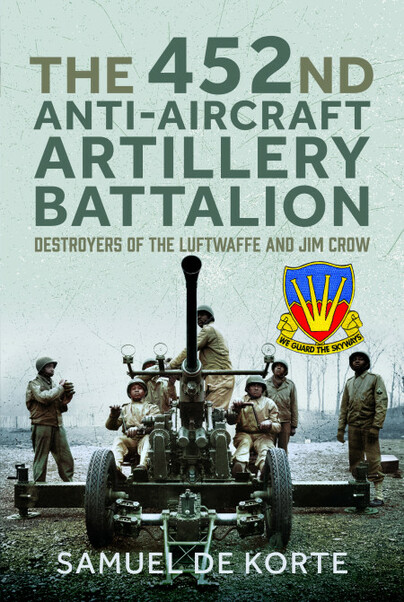
The 452nd Anti-Aircraft Artillery Battalion
During the Second World War, the airplane became a true menace. Flying faster, higher, and capable of carrying a heavier payload, air forces of the warring nations formed a formidable threat to the forces on the ground. To counter this, special anti-aircraft artillery battalions were created by the US Army. Several of these battalions, including the 452nd Antiaircraft Artillery (AAA) Battalion, were staffed by Black American soldiers. The 452nd AAA deployed in England in November 1943 and went ashore in Normandy, France, in June 1944. Assigned to XII Corps, part of General Patton's Third Army, the 452nd AAA was a valuable asset of the US Army. Armed with the deadly 40mm Bofor's gun and the .50 cal M45 Quadmount, these Black soldiers protected bridges, field artillery battalions and other vital installations during the Second World War. Some of the white soldiers from the field artillery battalions the 452nd AAA was protecting, doubted their abilities, but quickly came to appreciate the accuracy and coolness under fire of the Black soldiers. Credited with shooting down almost 68 hostile aircraft (one of the highest among AAA units in Europe), the 452nd AAA has rightfully earned its place in the history of the US Armed Forces during the Second World War. Although the battalion's motto was 'We Guard the Skyways', it would perhaps be more appropriate to call them 'Airplane Destroyers'. Almost 80 years after the war, this outstanding unit's history is finally made public.
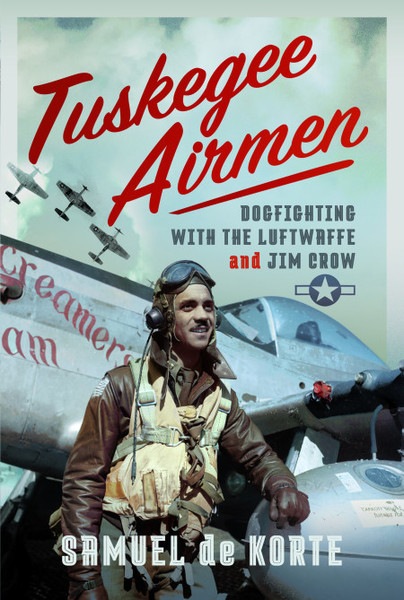
The Tuskegee Airmen
During the Second World War, the Tuskegee Airmen had not one but two enemies to overcome: the German Luftwaffe and Jim Crow. In this book, the inspiring history of these men is recounted detailing the struggles the men faced at home and abroad. The Tuskegee Airmen were black American pilots who served in the Army Air Corps during the Second World War. However, before earning their wings, these men and women needed to prove themselves to their white countrymen. After all, the racism prevalent at the time meant that black Americans were deemed unsuitable for the demands of modern war. After completing their training and conducting their first combat missions, the real enemy was waiting for them: the Luftwaffe. As a result of their role escorting the bombers, as well as their bright red tails, the Tuskegee Airmen of 332nd Fighter Group earned the nickname the 'Red Tails'. The units served with distinction in several fierce engagements, such as the 99th Fighter Squadron, who fought in the skies over Anzio on 27 and 28 January 1944, and the 332nd Fighter Group, who earned a Distinguished Unit Citation for its mission to Berlin on 24 March 1945.
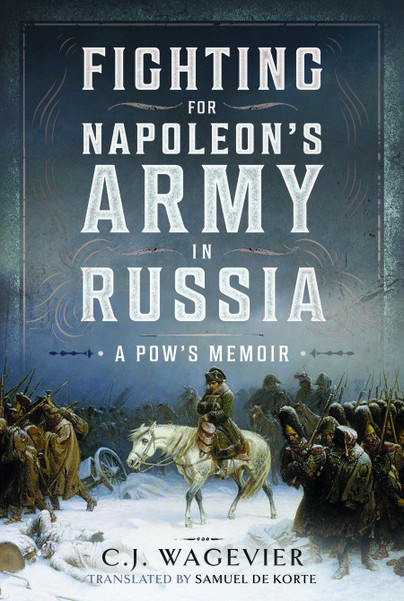
Fighting For Napoleon's Army in Russia
In 1812 the French emperor Napoleon decided to invade Russia. For this purpose, he gathered an army of half a million men and women, consisting of soldiers from all nationalities, including French, German and Italian. Serving in this army was Carel Jacob Wagevier, an officer in the 125th Regiment of the Line, which was staffed by mostly Dutch soldiers. Full of confidence, they went to war and began the long journey to the East. What followed was a horrific expedition deep into the Russian interior, a chaotic retreat, and captivity. Just like his fellow soldiers, Wagevier endured the cold, the stresses of combat, and the hunger that besieged the army. After fighting at the battle of Berezina in November 1812, he was taken prisoner and transported all the way to the Russian interior. In 1814 he and his remaining fellow officers were released, and together they started the journey back home. During his travels across Russia, he made notes of events that occurred or meetings that seemed memorable, including ones of unexpected generosity as well as sudden cruelty. These notes were later expanded into his memoir and published in 1820. Now, for the first time ever, they have been translated into English, providing a unique and fascinating insight into the life of a solider in Napoleon's army.
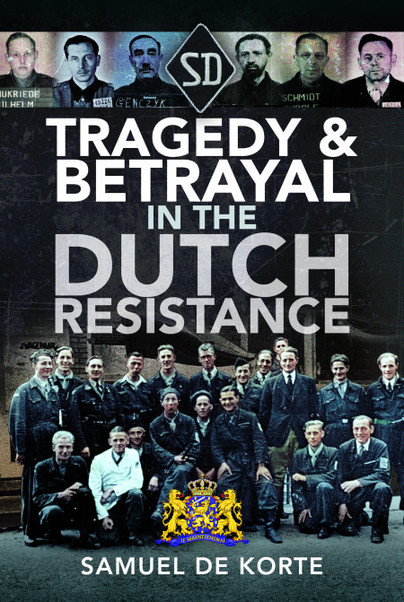
Tragedy & Betrayal in the Dutch Resistance
On the night of 31 March 1945, five men were woken and taken from their cells in the city of Zwolle, in The Netherlands. They were put in a vehicle and escorted by the German occupying forces to a street nearby, where all five were lined up and executed. The corpses were left behind as the Germans left the scene. Whether by accident or betrayal, these men had fallen in to the clutches of the Sicherheitsdienst, the Nazi intelligence service. Although the liberation was at hand (Zwolle would be freed less than two weeks later), these men did not live to see it. This book not only reveals what the men had done and the reasons behind their execution, but also the experiences of their wives, who had tried to obtain their husbands' release, while other women were deported to concentration camps. Attention is also paid to the execution and the process leading up to it. Combining interviews with descendants, eyewitnesses, acquaintances, archival research, historical books and newspapers, family member and history student Samuel de Korte recreates an image of the executed men on that fateful morning and the families they left behind. Using a number of rare and well-known photographs, the condemned are portrayed as resistance fighters as well as fathers and husbands. The book examines not only the consequences of the men and their actions, but also the grief of the women who were left behind.

Executie aan de Meppelerstraatweg
De Tweede Wereldoorlog was bijna afgelopen. Toch werden er op de vooravond van de bevrijding, op 31 maart 1945, vijf mannen doodgeschoten aan de Meppelerstraatweg in Zwolle als vergelding voor een aanslag op een spoorbrug. Wilhelmus van Dijk, Hermanus Bosch, Willem Sebel, Johannes Muller en Berend IJzerman. Zij hadden allemaal gestreden tegen de gehate bezetter en waren voor verschillende vergrijpen vastgezet: Wapenbezit, spionage of hulp aan onderduikers. Zij zouden de doodstraf krijgen voor wat zij hadden gedaan. Ter nagedachtenis aan hun offer werd er een monument geplaatst op de Meppelerstraatweg en is er jaarlijks een herdenkingsplechtigheid. Maar wat was er werkelijk gebeurd die fatale ochtend? Wat was er misgegaan en wat had plaatsgevonden, waardoor zij daar terechtgesteld werden? Aan de hand van nooit eerder verschenen foto's, unieke bronnen, getuigenverhalen en nieuw archiefmateriaal uit Nederland en het buitenland worden de gebeurtenissen tot aan de fatale ochtend verteld en verklaard. Ook wordt het lot van de nabestaanden behandeld en wordt de executie in een bredere context geplaatst.