
My visit to Lorraine American Cemetery and Memorial in St. Avold and the 614th Tank Destroyer Battlefield in Climbach, France
Last weekend, I went to the American Cemetery in St. Avold and visited Climbach, France. Climbach is the site where Third Platoon, Company C, 614th Tank Destroyer Battalion (TD) fought, and at the Lorraine American Cemetery there's a specific grave I wanted to visit. As a researcher who writes about Black American units in World War II, these places hold particular meaning for me.
Lorraine American Cemetery and Memorial in St. Avold
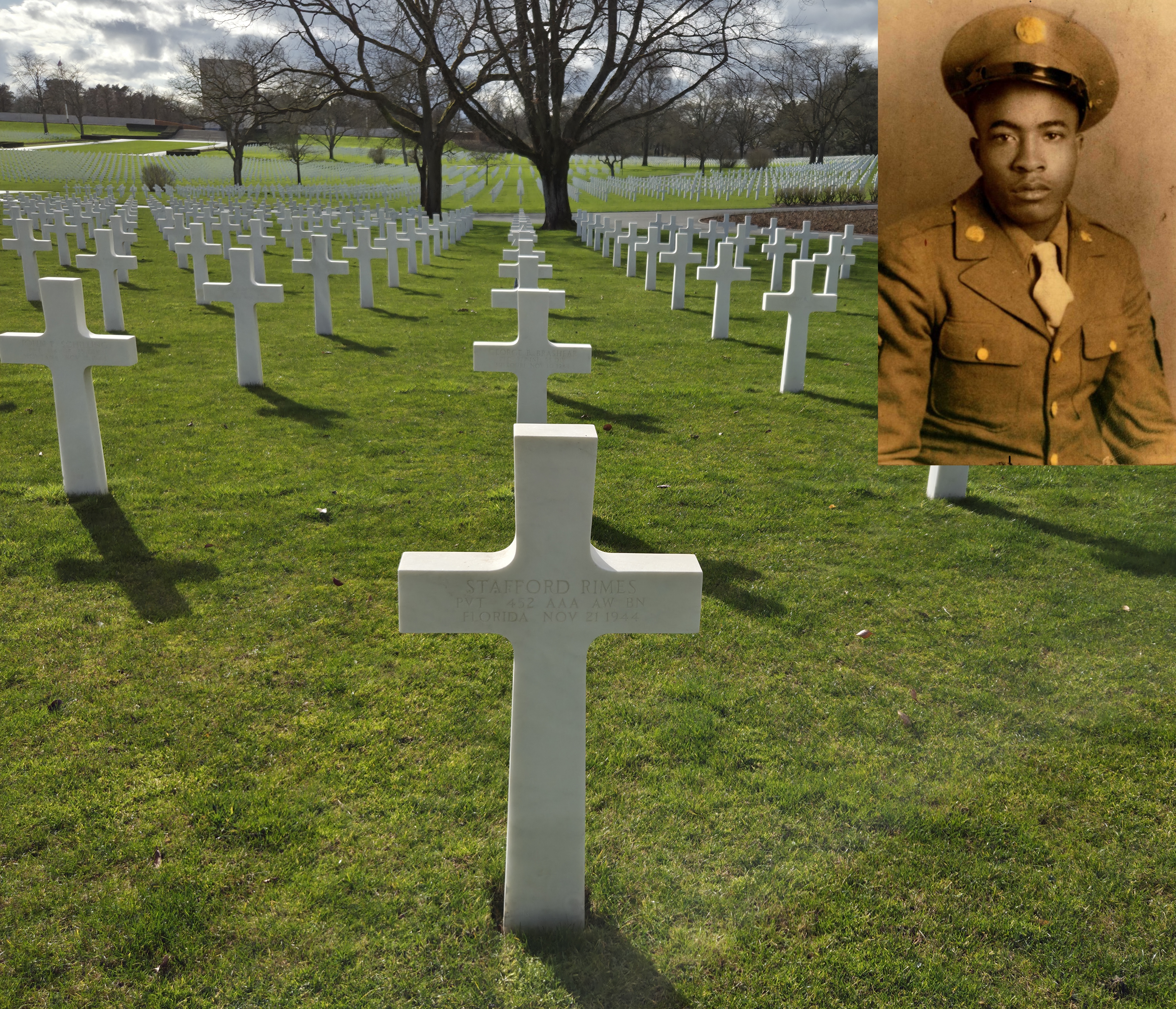
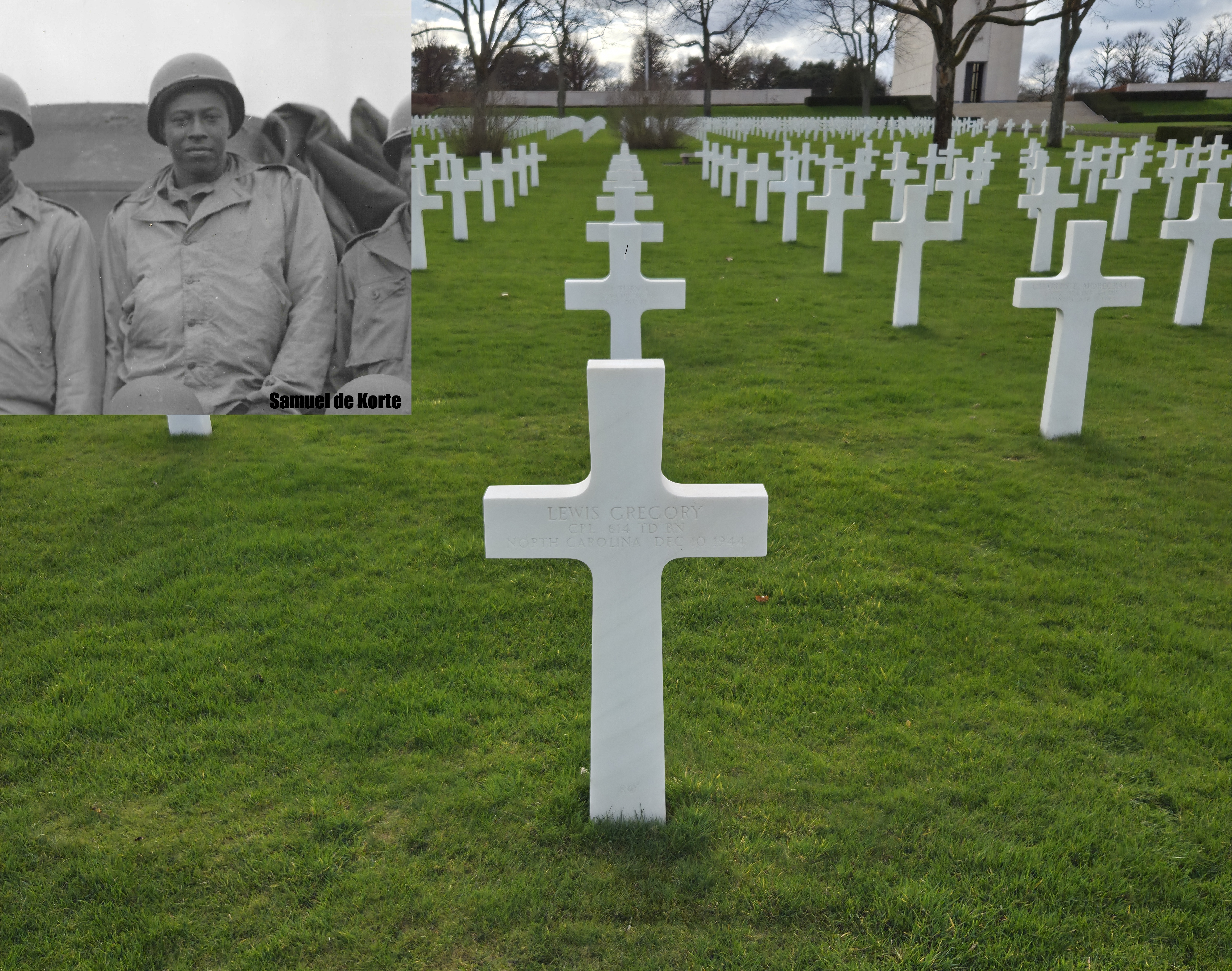
There are over 10.487 Americans buried at the Lorraine American Cemetery, as well as 444 more commemorated on the Wall of Missing. 14 of these casualties are from the 614th Tank Destroyer Battalion, about whom I wrote a book, as well as a soldier of the 452nd Anti-Aircraft Artillery Battalion (AAA), which unit I also wrote a book about, and soldiers from the 827th Tank Destroyer Battalion. It's a unique experience to visit each of their graves. It makes history much more real. They aren't just names in a document, but people who lived and breathed. The casualties and grief are not just numbers or abstract, but people who had a family. One of these soldiers is Private Stafford Rimes of the 452nd AAA, with whose family I connected during my research. Knowing the stories, how they died, and in some cases what they looked like, and then standing in front of their headstone, it shows the human side of the war. They are not just statistics or casualties, but real people.
Visiting Climbach
The next day, we were in Climbach, France. I was greatly assisted by two local people: Marcel Lorentz and David Foxwell. Both men live in the area and know a lot about the history. We visited the area from which Third Platoon, Company C, 614th Tank Destroyer Battalion, approached the village as part of Task Force Blackshear and deployed their towed three-inch guns in view of the enemy. Third Platoon, Company C, 614th TD, would later receive the Distinguished Unit Citation (now known as the Presidential Unit Citation) and Charles Thomas would be awarded the Medal of Honor. The area is much more different now, trees having risen up that weren't there before, but with the aid of wartime maps, you can recognize aspects of the battlefield. We also visited other old French fortifications from the Maginot line. In Climbach, there are plans to establish a monument for Third Platoon, Company C, 614th Tank Destroyer Battalion and I follow the process.
Wereth Eleven

After Climbach, we started on the road back. While sitting in the car, we made the spontaneous plan to stop at the Wereth Eleven memorial in Belgium. Eleven Black American soldiers of the 333rd Field Artillery Battalion, who had evaded capture during the Battle of the Bulge, were betrayed by a local civilian and murdered by Waffen-SS soldiers of the 1st SS Panzer Division Leibstandarte SS Adolf Hitler. The site still hosts annual commemorations. It's quite a contrast to the earlier locations I had visited, but equally interesting.
Closing reflection
By the end of the weekend, what stayed with me most was how these places connect: the graves at Lorraine, the battlefield at Climbach, and the field near Wereth. Each site represents a different moment in the history of Black American service in Europe. Combat, sacrifice, and in the case of the Wereth Eleven, a war crime and silence that followed. Being able to visit these sites in person makes the history, which you normally read in documents or archives, much more real. It also strengthened my resolve to keep assisting in ensuring that Black Americans' contributions to World War II are honored and commemorated.
About the author
Samuel de Korte is a historian specializing in Black American soldiers during World War II. He has written books on the 614th Tank Destroyer Battalion, the 452nd Anti-Aircraft Artillery Battalion, and the Tuskegee Airmen. His work focuses on Black soldiers, segregation, memory, and the way World War II is remembered. Learn more about Samuel de Korte.